Overview
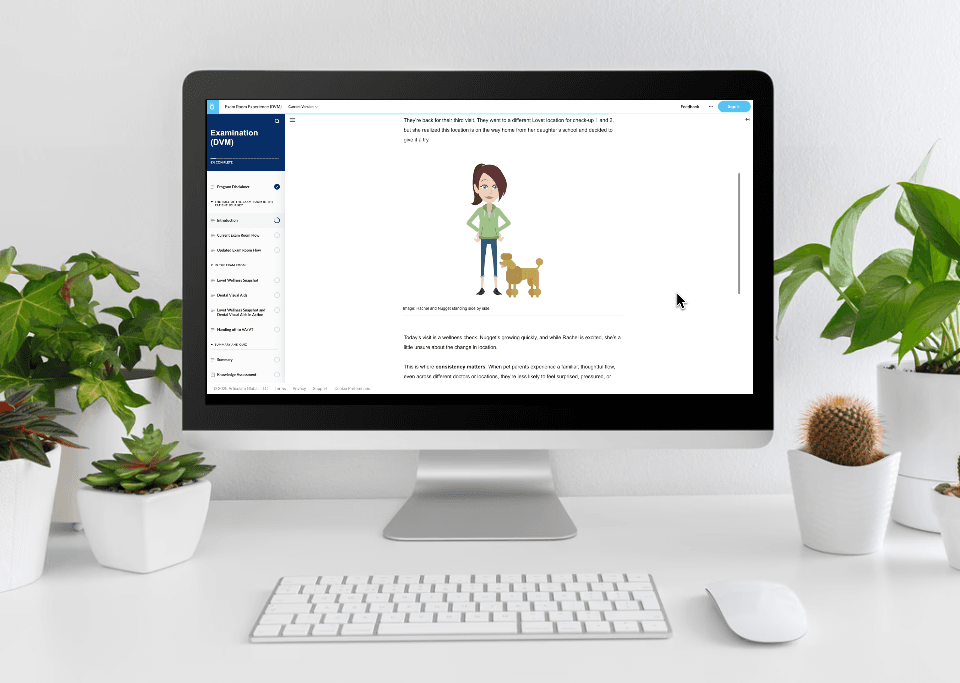
The Examination (DVM) module is one of the first courses in an 8-part learning rollout supporting the integration of newly acquired veterinary practices. Because the exam room is a critical moment in the pet parent journey, this training focuses on standardizing exam room workflows, communication expectations, and use of newly introduced tools.
The course guides DVMs through the updated examination experience, emphasizing consistency, clarity, and professionalism to support a high-quality clinical and brand-aligned experience for pet parents. The training was designed to be concise, accessible, and practical, enabling DVMs to confidently apply updated workflows in their day-to-day practice.
Audience
DVMs (Doctors of Veterinary Medicine) across newly acquired clinics
Responsibilities
- •Instructional Design
- •E-Learning Development
- •SOP Interpretation & Alignment
- •Workflow Mapping
- •Visual & Multimedia Design
- •SME Collaboration
- •Rapid Development & Iteration
- •Change-Management Support
Tools
 Articulate Rise
 Canva
 Microsoft Word
 Vyond
My Role
- •Served as an instructional designer on an 8-module training rollout, personally designing and developing 4 e-learning modules, including the featured Examination (DVM) course.
- •Completed each module within a 2-week development cycle, preparing the full set of training for delivery to 446 clinic employees across newly acquired locations.
- •Aligned all module content with the AGES learning model to strengthen clarity, retention, and on-the-job application during a major organizational transition.
- •Collaborated closely with 4 subject matter experts and executive leadership to interpret brand-new SOPs, clarify updated workflows, and ensure consistency across all locations and course materials.
- •Incorporated iterative SME and stakeholder feedback throughout the project to refine accuracy, reinforce new tools, and maintain alignment with Lovet's brand and clinical expectations.
The Problem
Following the acquisition, The Aspen Group needed to address several inconsistencies across newly acquired veterinary clinics:
- •Clinics were following different exam room workflows.
- •Communication with pet parents varied widely by location.
- •New SOPs and tools had just been introduced and were not yet understood or applied consistently.
- •The overall pet parent experience was not consistent with Lovet's brand standards.
To create a unified, reliable experience across all locations, the organization needed clear training that standardized the exam room flow and introduced the new tools and expectations.
The Solution
To address inconsistencies across clinics, I designed and developed a standardized exam room workflow training that focused on clear instruction and practical application. The module:
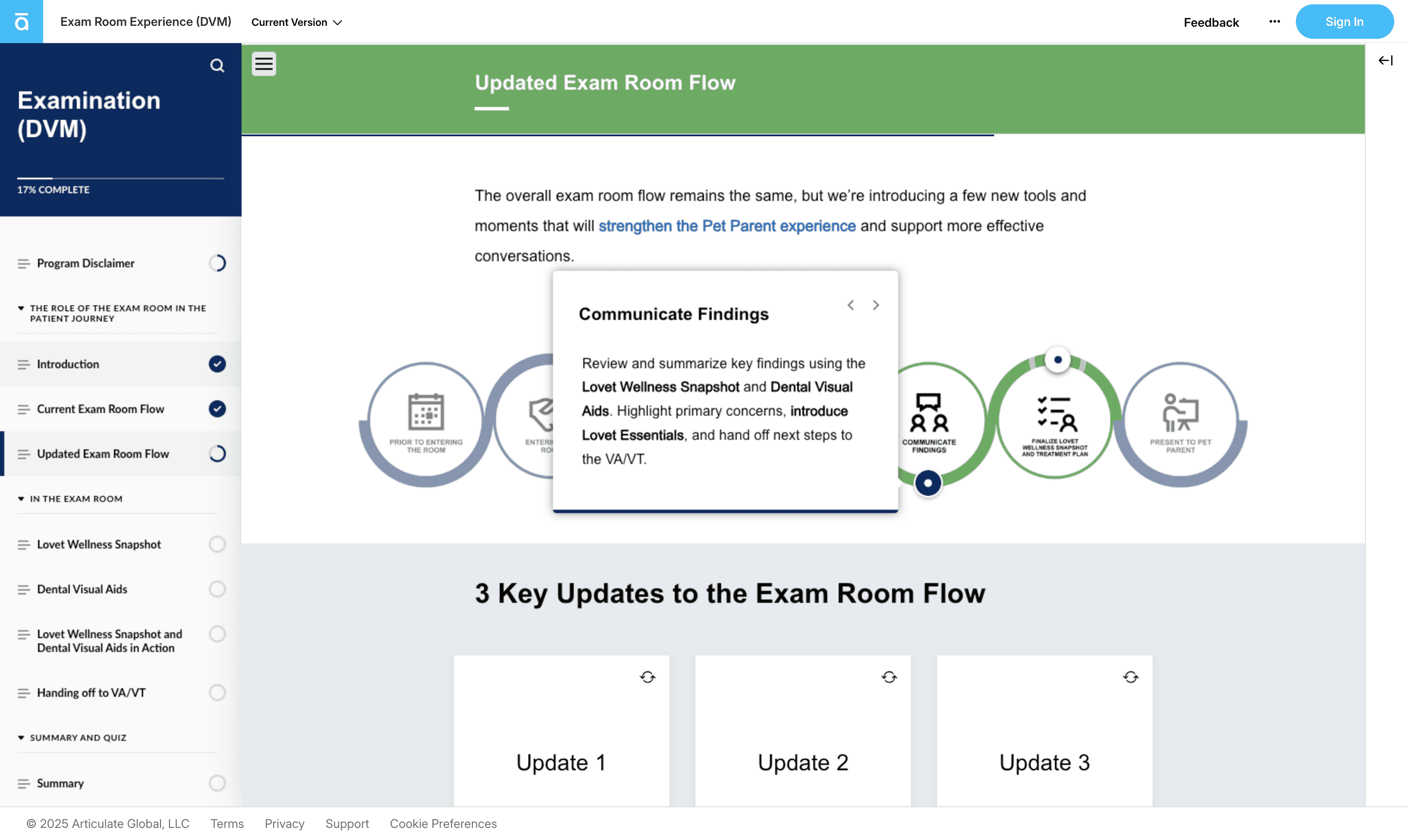
- •Walks learners through the updated exam flow step by step
- •Introduces newly created SOPs and tools in a clear, easy-to-follow format
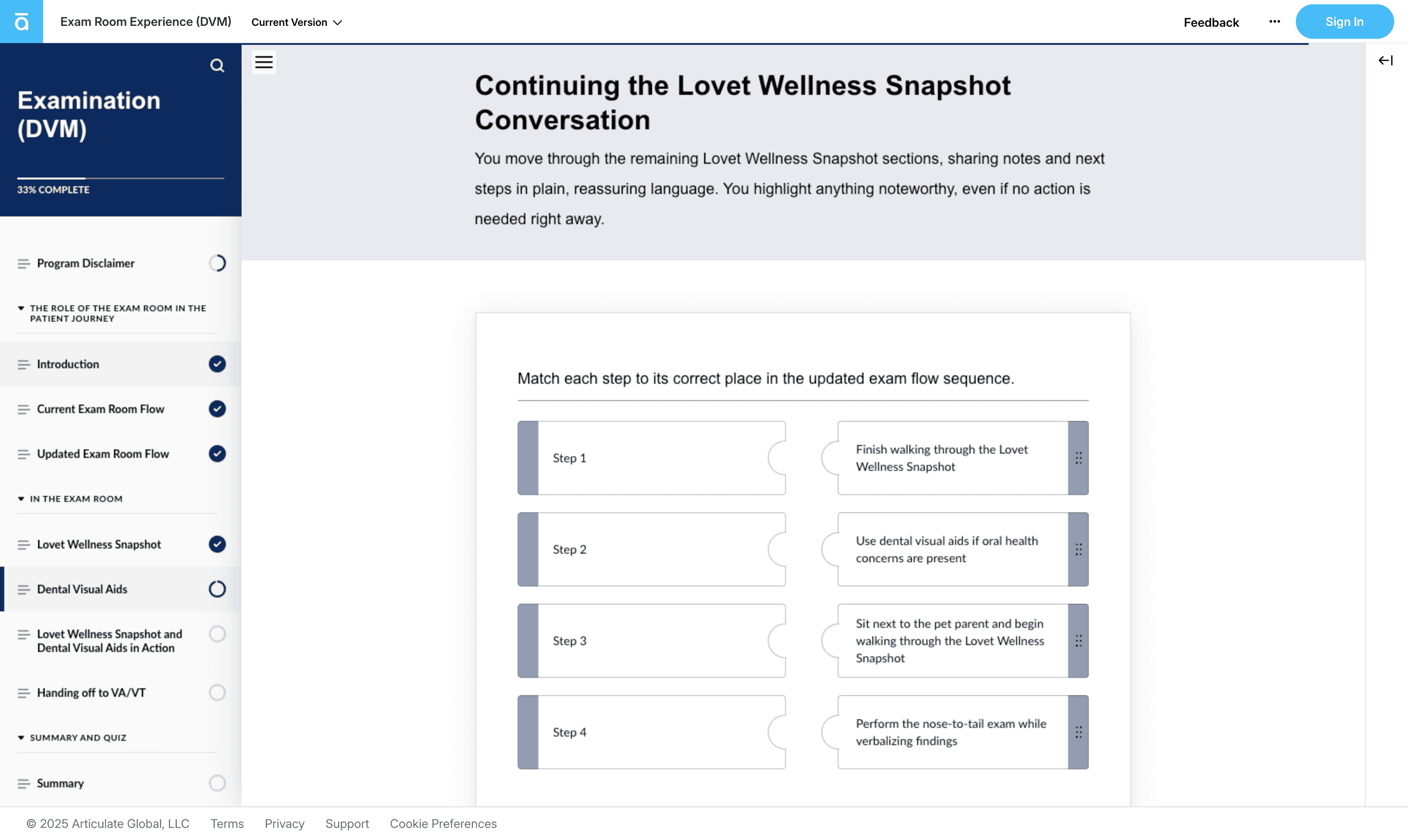
- •Reinforces learning through knowledge checks and a final assessment
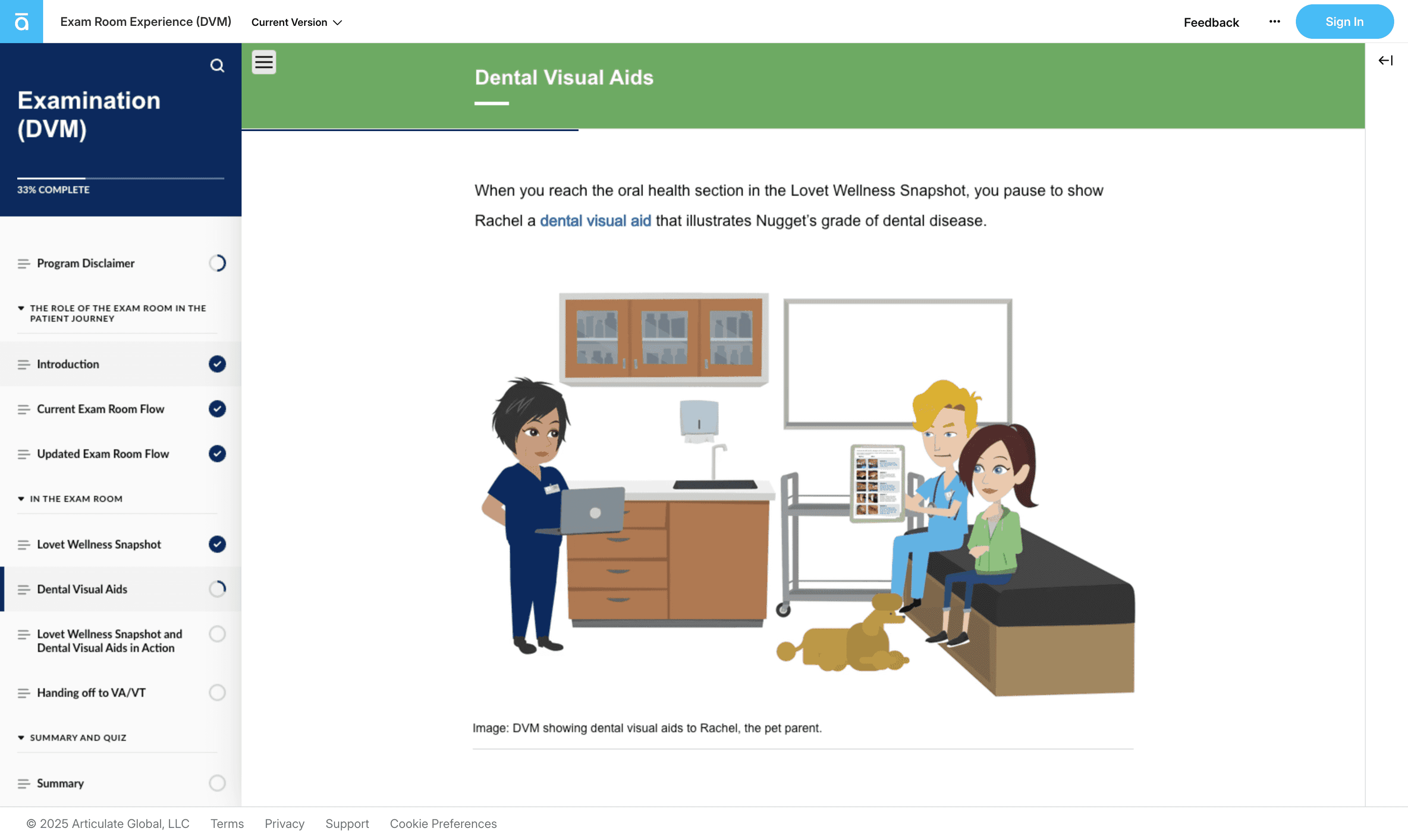
The module was built in Articulate Rise, with custom visuals created in Canva and short animations built in Vyond to illustrate key moments in the exam room workflow.
My Process
To ensure consistency across all 4 modules I developed for this training rollout, I followed a repeatable, structured process aligned with the ADDIE model. The Examination (DVM) module below serves as a detailed example of how I applied this workflow from start to finish.
Analysis
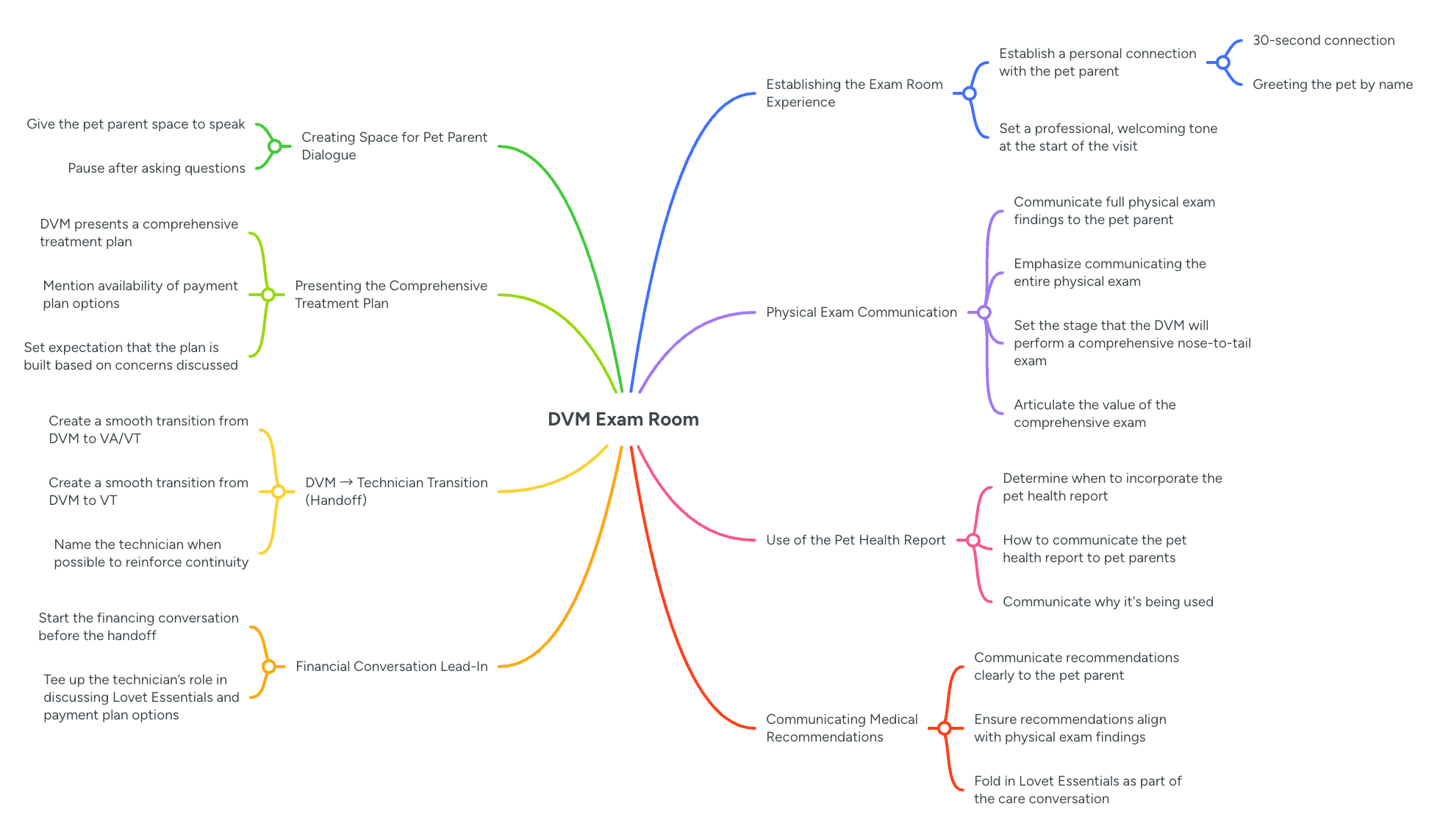
- •Met with 4 subject matter experts and stakeholders to identify exam room workflow and communication inconsistencies, documenting key insights in a mind map to surface patterns and pain points.
- •Reviewed newly introduced SOPs and tools to determine what staff needed to learn and apply consistently.
Design
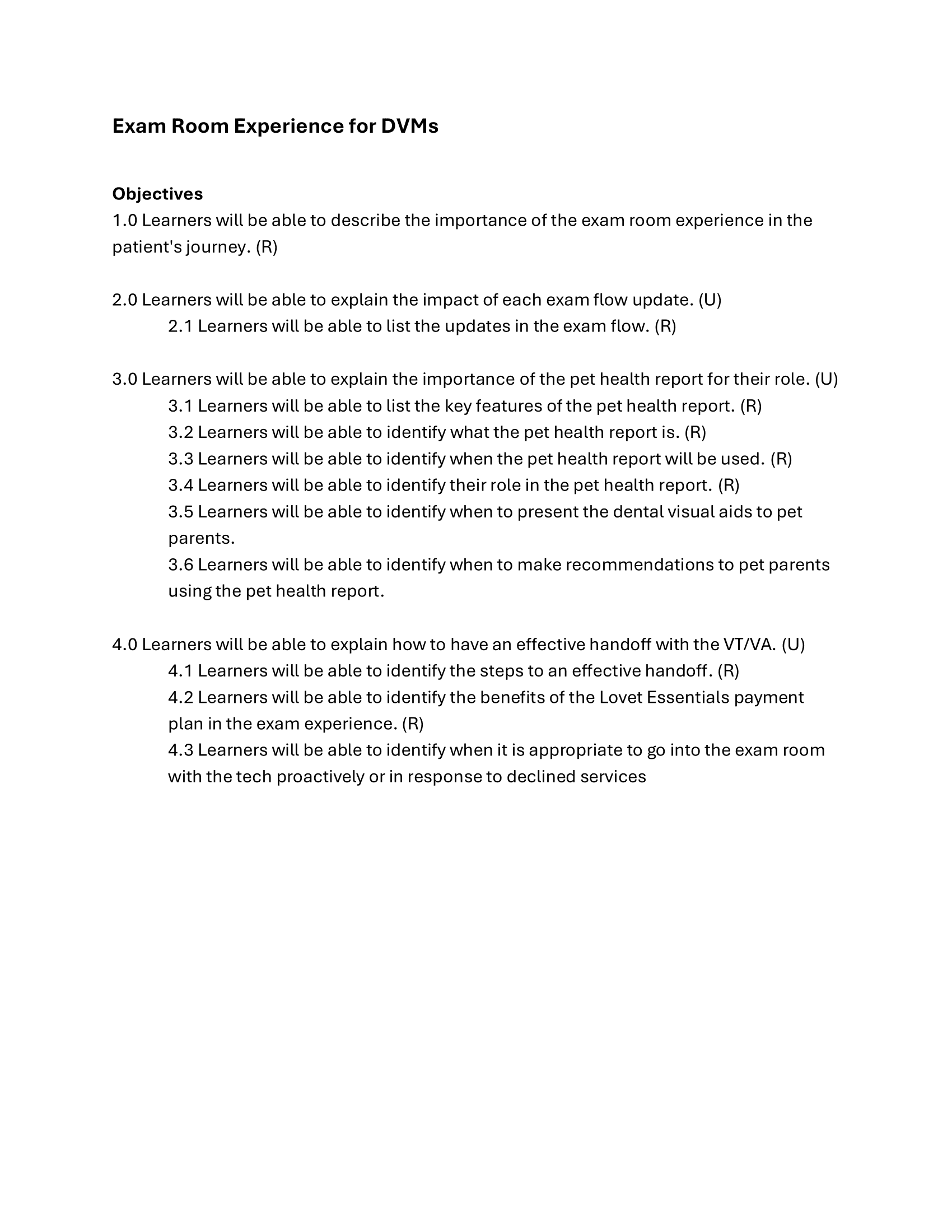
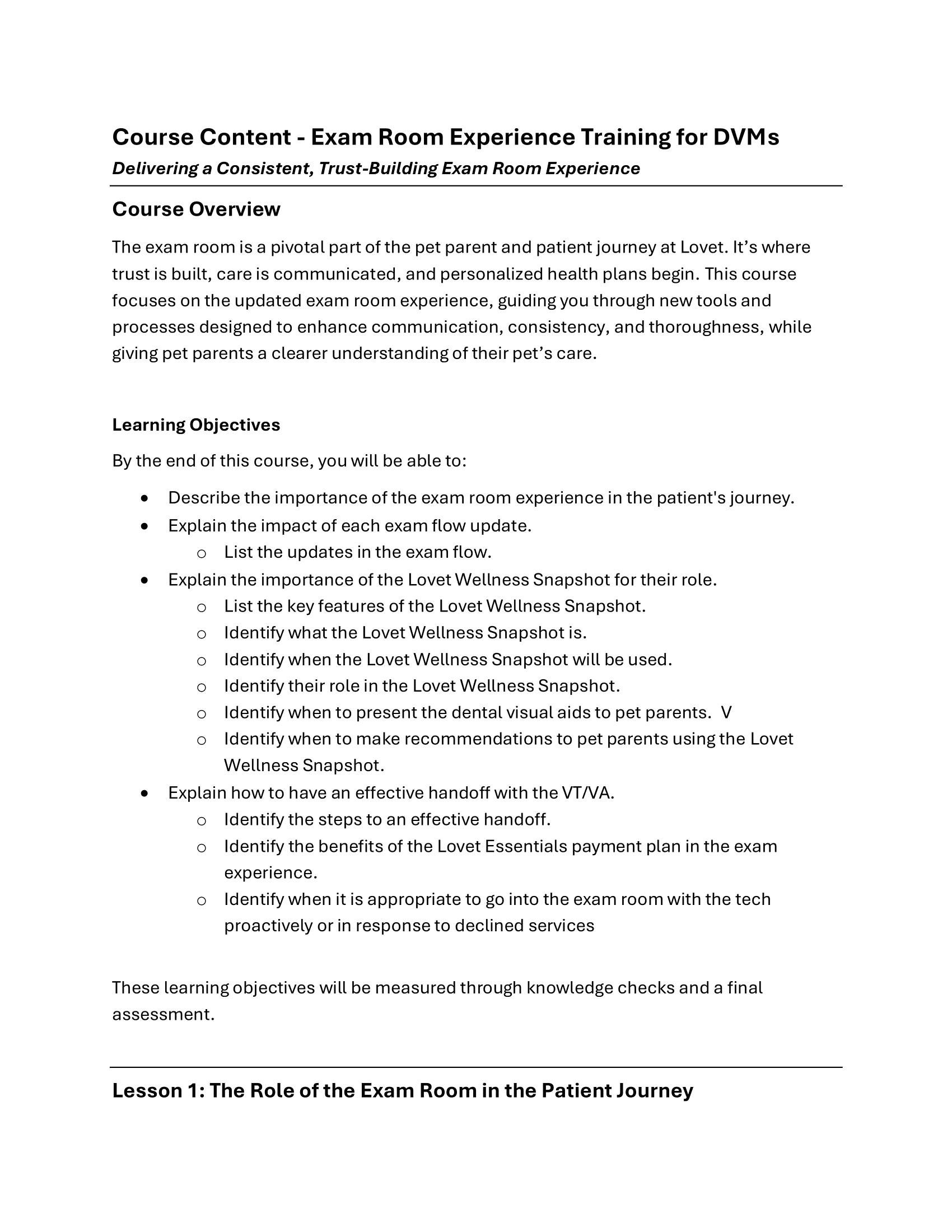
- •Created a course outline mapping updated examination expectations to clear, measurable learning objectives.
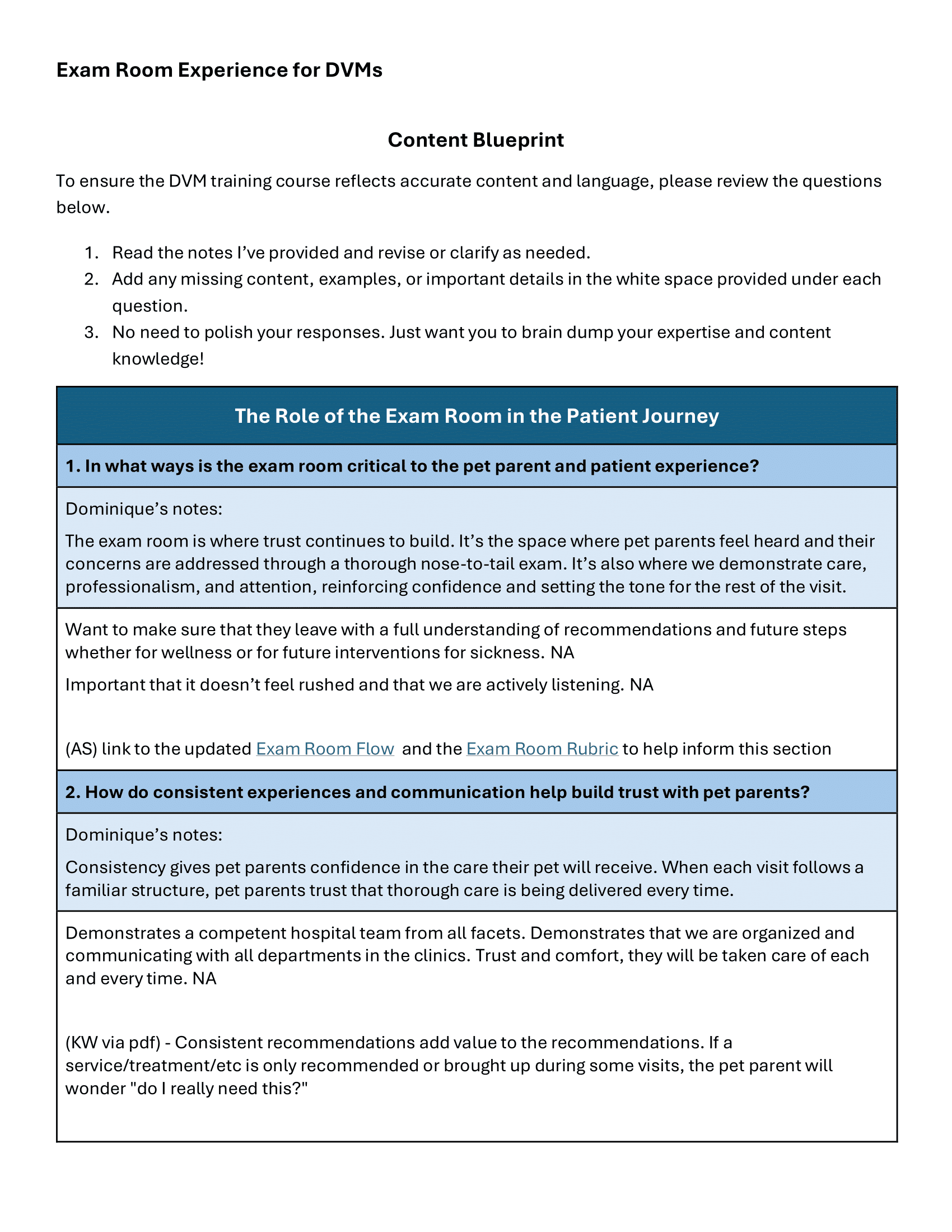
- •Developed a blueprint document with structured questions and content prompts for SMEs to complete with technical and operational details.
- •Synthesized SME input into a cohesive instructional flow and drafted the full module content.
Develop
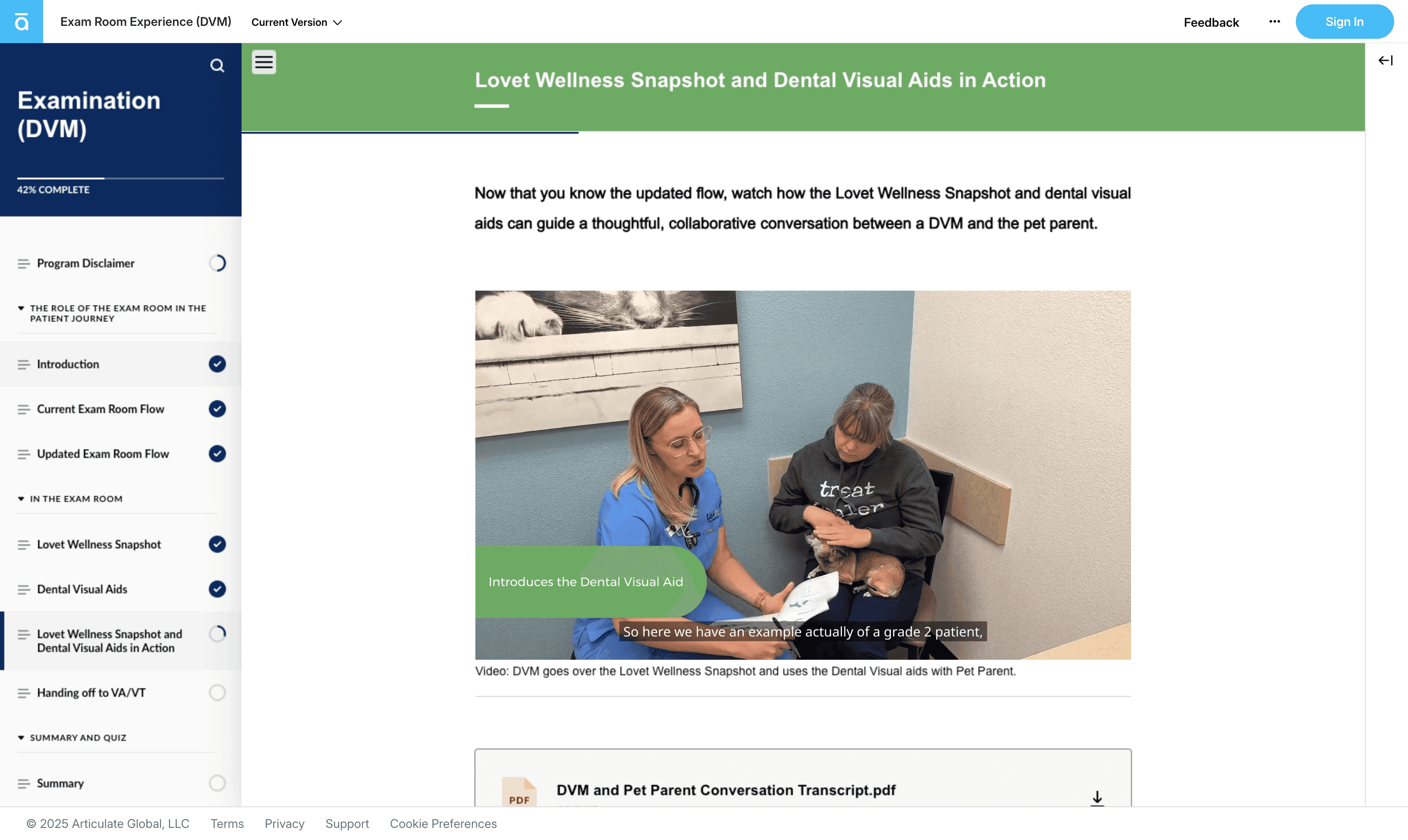
- •Built the full Examination (DVM) module in Articulate Rise, translating the approved training draft into an interactive, self-paced learning experience.
- •Designed and integrated short Vyond animations to model real-life exam room workflows and tool usage.
- •Integrated knowledge checks and a final assessment aligned with the learning objectives to reinforce understanding and on-the-job application.
Review
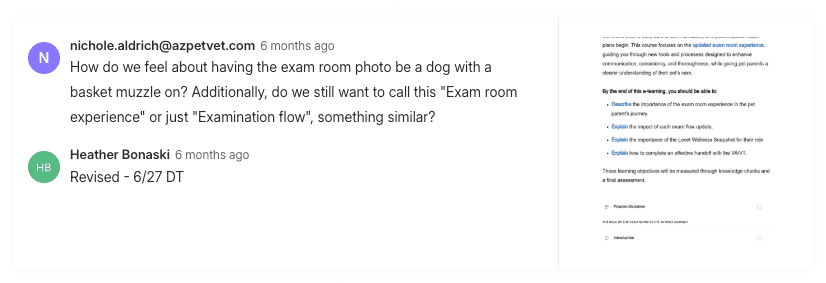
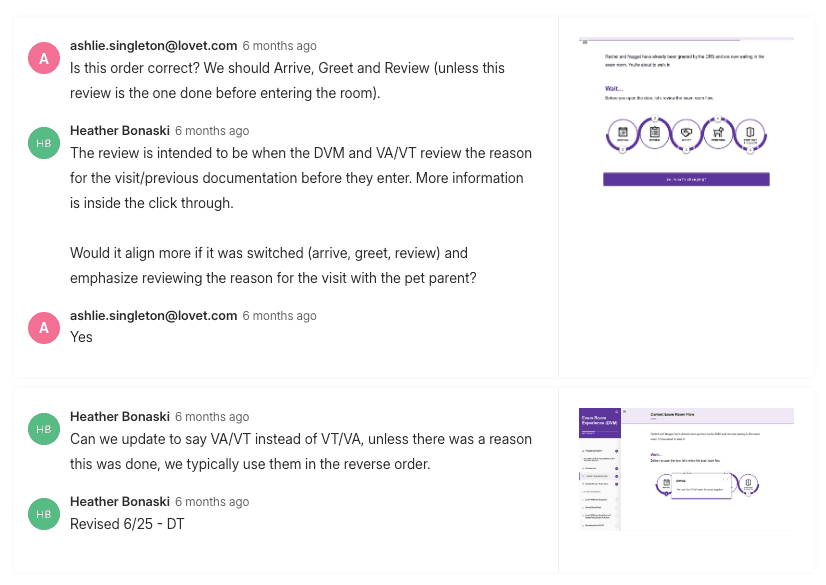
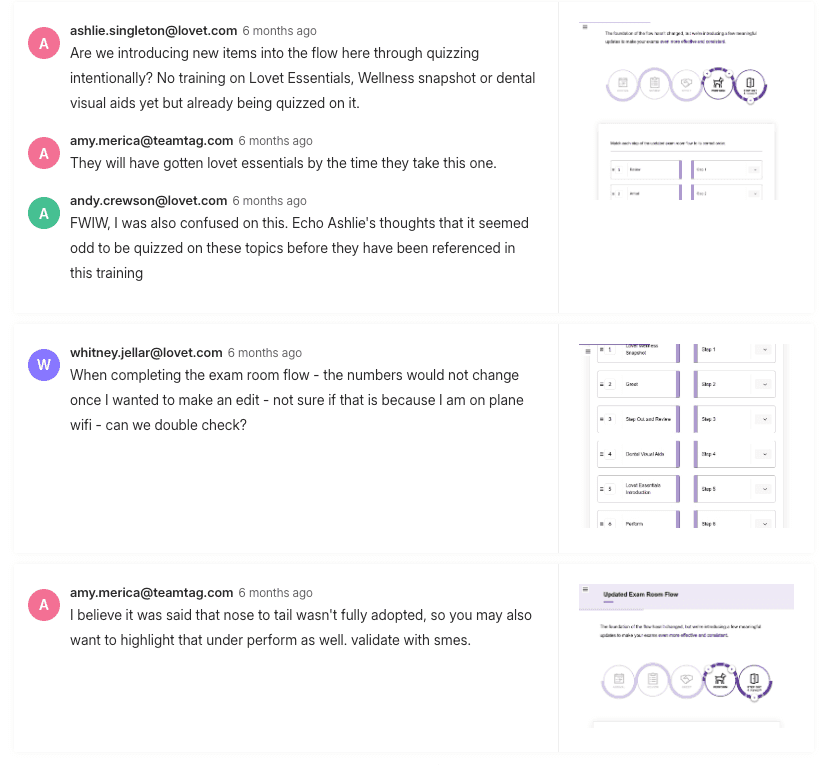
- •Shared the initial Articulate Rise build with SMEs and stakeholders for review.
- •Gathered feedback related to exam room workflow clarity, communication expectations, and correct use of newly introduced tools.
- •Iterated on the module based on SME and stakeholder input, refining language, visuals, sequencing, and assessment questions.
- •Confirmed clinical accuracy and alignment with updated SOPs prior to rollout.
Note: The work samples shown here were created during my contract. As is standard practice, Articulate Rise modules are company-owned, and ownership is typically transferred to a training manager or administrator after project completion or departure. As a result, these samples display the names of training managers rather than my own.
Implementation
- •Finalized the Examination (DVM) module and prepared it for rollout as part of the larger training launch.
- •Deployed the training to 446 clinic employees across newly acquired locations.
Evaluation
- •The training achieved an average 7.24/10 likelihood-to-recommend score based on learner responses.
- •91.7% of learners agreed or strongly agreed that they could apply the knowledge and skills from the training to their job.
- •Qualitative feedback reflected increased clarity around updated workflows and tools, alongside some learner hesitation related to organizational standardization during the acquisition.
Takeaways
Consistent formats enable better collaboration. Using structured templates for outlines, blueprints, and drafts created a shared language with SMEs and stakeholders, reducing ambiguity and accelerating alignment during a fast-paced rollout.
Rapid iteration builds trust during change. Maintaining openness to feedback and making visible improvements helped stakeholders feel heard and increased confidence in the training during a period of organizational transition.
Training must address both process and perception. Beyond teaching new workflows, effective learning design must acknowledge and help bridge learner hesitation toward newly introduced corporate procedures.
Additional Courses I Developed for This Rollout
In addition to the featured Examination (DVM) course, I designed and developed the following e-learning courses as part of the broader 8-course training rollout. Each course followed the same instructional design process, with content tailored to specific roles and touchpoints in the pet parent journey.
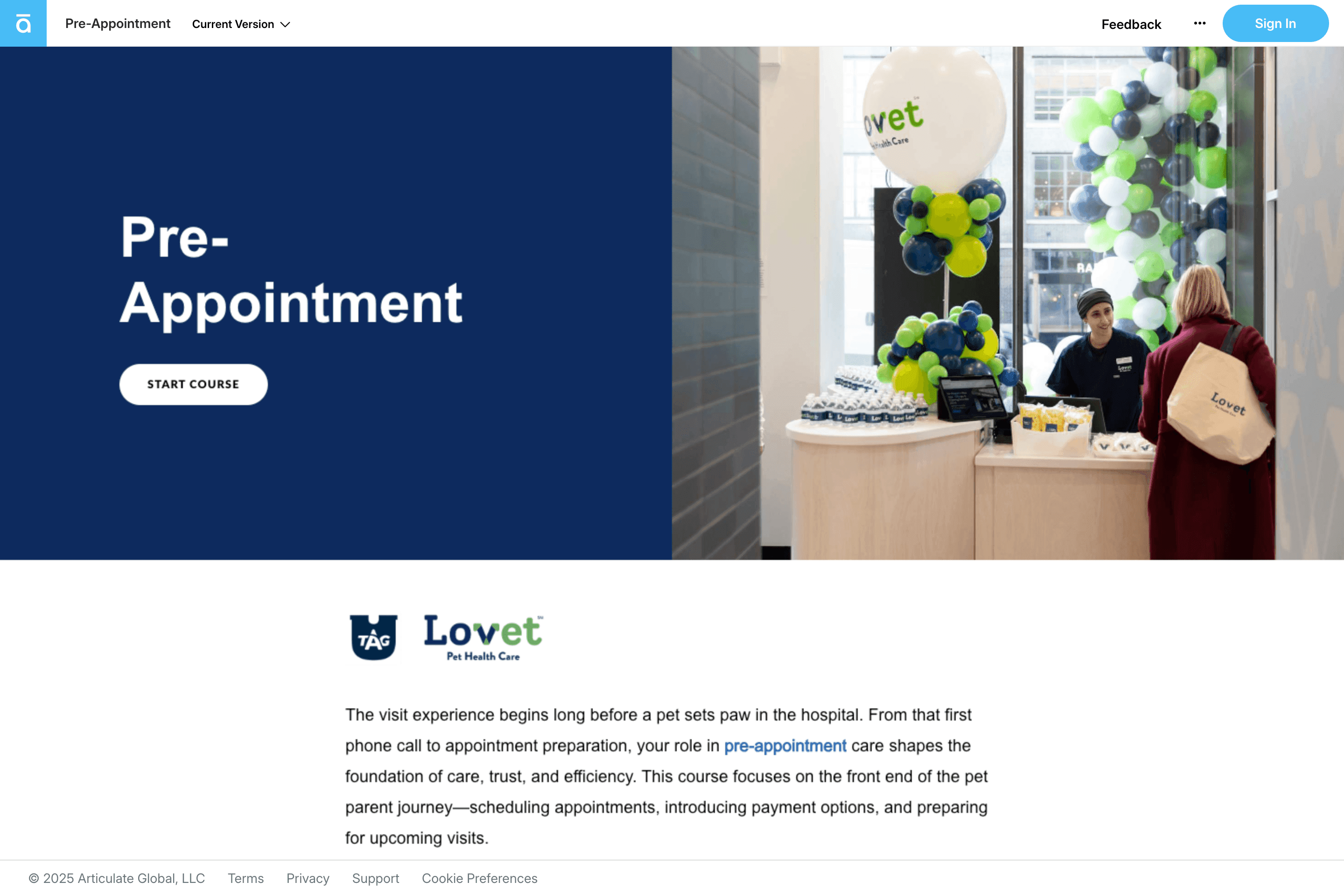
Pre-Appointment Training
This course addresses the front end of the pet parent journey, guiding staff through appointment scheduling, preparation, and communication protocols.
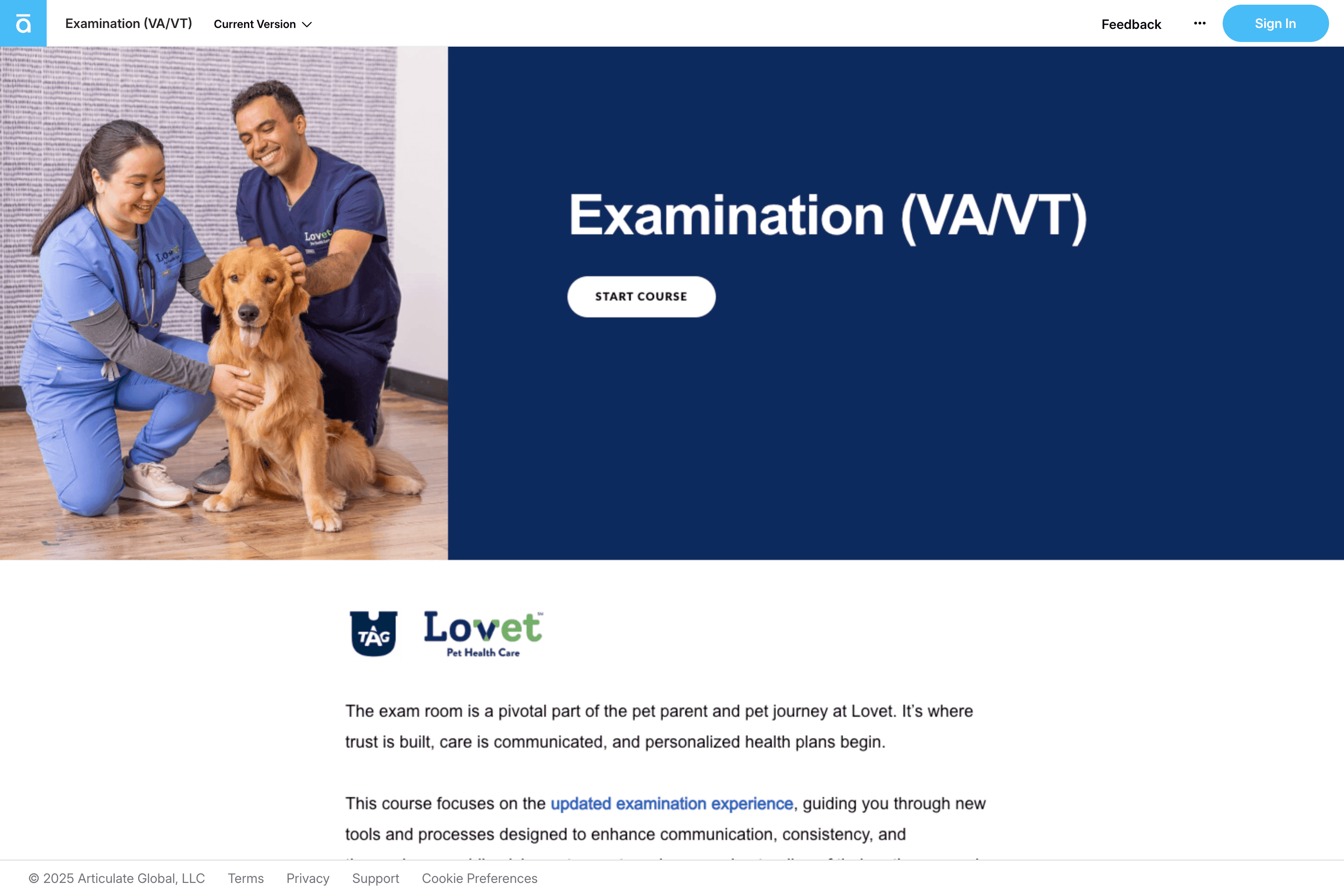
Examination (VA/VT)
This course focuses on the updated examination flow from the VA/VT perspective, emphasizing how to support the DVM, communicate clearly with pet parents, and apply new tools consistently during the exam.
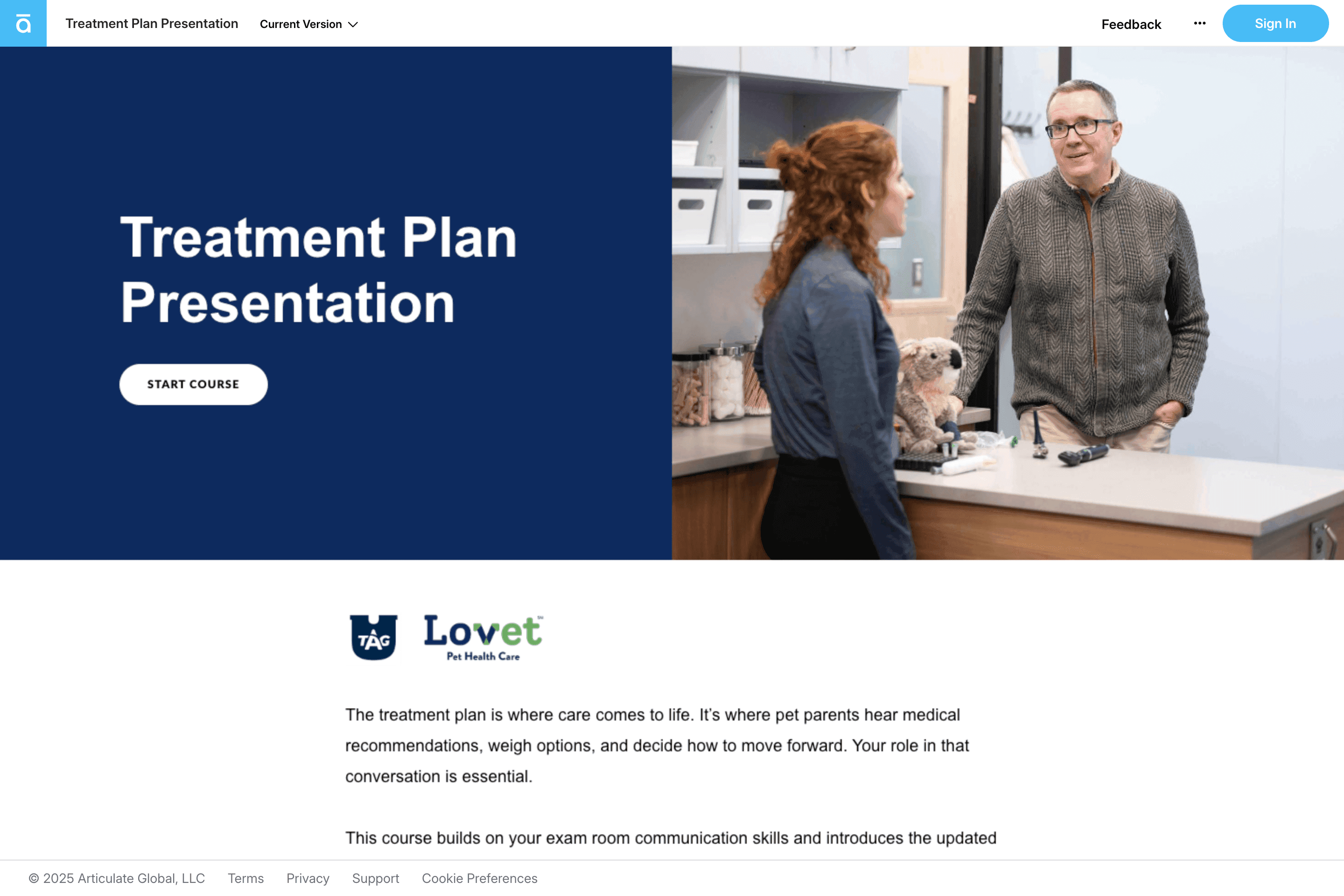
Treatment Plan Presentation Training
This course builds on exam room communication skills and introduces the updated approach to presenting treatment plans.